
[ Ponderosa pine, Shevlin Park ]
These are the moments when a company starts to outgrow the way it was built. Founders tend to feel them before they can name them.
You built this company by being in every room and on every call, and that got you here for good reason. At some point between fifteen people and fifty, the organization needs to be able to move even if you’re not in every meeting; that is the shift from a company that runs on its founder to one that runs alongside its founder. The whole point is making the rest of the company strong enough that you can spend your time on the work that needs you the most.
Your engineers are building with AI, and individuals across the team are using it to move faster on their own. But the way the company actually operates (how decisions get made, how information reaches the people who need it) hasn’t changed much. The gap between what AI can do for one person and what it can do for the organization is where real operational leverage sits untouched. Selectively wiring AI into how a company runs is a different challenge than wiring it into a product, and the companies that get it right are putting themselves in a position to move more quickly.
You have something that works and customers who prove it. That was the first hard part, and you solved it. The next hard part is different: the segment, the positioning, the pricing, the motion that turns a proven product into a repeatable business. Meanwhile, the building and the selling don’t stop. You earned the right to do all of it, plus operate a growing business, which is a genuinely hard thing to add to a list that was already long.
Buried in implementation and escalations. No time to sell.
Execution is systemized. The founder's time goes to building and selling.
A proven product with no go-to-market engine.
Positioning, pricing, pipeline, and lead automation are built and running.
Decisions depend on the founders. No cadences or processes.
Lightweight operational rhythms that scale with the company.
Market data lives in scattered notes and half-remembered conversations.
A structured system that surfaces signals from customer and partner conversations.
Talented people growing slower than the company needs.
Leaders coached to see around corners and own their domains.
Most operators go deep in one function and lead from that vantage point for the rest of their career. I went deep in several: product, go-to-market, professional services, strategy, and operations, with real team and leadership accountability in each, across a sequence of companies that ranged from pre-revenue startup to public company. That accumulated depth changes what's actually visible from the operational seat. I also genuinely care about the leaders I work with; the ones who are outpacing their own experience grow faster when someone invests in them with real candor, and I find that investment as important as any of the systems I'm building. The sensibility underneath all of it is calibration: the judgment about how much structure a specific company at a specific stage actually needs. The AI and automation capability is the amplifier: I can move from identifying a problem to designing and shipping a solution, which shortens a cycle that most operators have to hand off entirely.
Four areas of work. Engagements tend to impact several of them at once.
The operating layer that companies need when decisions start traveling across teams instead of happening in one room. What works at fifteen people starts to strain at fifty and break at a hundred and fifty. The cadences and processes I build keep the organization oriented without monopolizing the calendar, and give consequential decisions a clear enough shape that the team can act on them confidently, so the founder can spend more of their time where it matters most. Those structures compound when the leadership team is working from a shared understanding of the state of the market, where the company is headed and why, and what each person and team are accountable for. When alignment becomes reliable, it shows up as organization-level velocity.
Production-grade AI and workflow automation designed around what the business needs at this stage of growth. These systems are built directly into the operations and strategy: processing and structuring market conversations to ground go-to-market decisions in real evidence, or automating the data flows that keep operating cadences running on current information. Product management rigor and hands-on expertise building with AI for enterprise customers mean the quality bar is high; these are working systems that run every day.
Taking a proven product to the customers who should be buying it. Founders have earned real knowledge about their markets; I start by pressure-testing that knowledge from more than one angle until the positioning and segmentation are specific enough to build a repeatable motion around. I build automation that processes the company’s own customer and prospect conversations, so the strategic work is grounded in what the market is actually saying. Sales tools and outbound automation follow from there.
Companies that hire well tend to have leaders who are outpacing their own experience, taking on more scope than they’ve ever managed, whether the company builds everything else around them or not. The gap between what someone can do and what they’re being asked to do is where the deepest investment in leaders pays off, because it frees founders to spend time building and selling.
The operational work I do has a technical dimension that most operators can't offer. I've shipped production AI and automation systems that are running inside companies right now, processing real data and producing real output every day. The most recent takes in more customer and market conversations than any individual could absorb, identifies the signals that matter for product direction and competitive strategy, and surfaces them for the leadership team. Those signals used to live in scattered notes and half-remembered conversations. Now they're structured and searchable, and they inform how the company makes decisions.
I built that system because I saw the problem from the COO seat and had the technical capability to design and ship a solution around what the business actually needed. That pattern runs through everything I do: operational experience tells me where the leverage is, and I have the skills across AI, automation, and workflow tooling to build it. When I find a problem inside a company that should be automated, I can move from identifying it, to designing, to building, to shipping a working solution, often alongside the engineering team. That's a very different conversation than handing someone a requirements document and waiting.
Duncan played a major role in helping us build our document intelligence platform, which has become a true strategic wedge for LoanWatch. Today, that platform is running in production for customers managing hundreds of millions of dollars in assets.
Ops in Focus works with growth‑stage technology companies, typically 25–150 employees, most often around the Series A to Series B stage. These are companies that have found product-market fit and are starting to feel the operational gaps that come with scaling: everyday decisions still routing through the founders instead of being made by the people closest to them, processes that haven't kept up with headcount, and a leadership team that needs more context than any single person can provide. If that sounds familiar, we should talk.
The details of what I do inside a company look different every time, but there are clear patterns. I start by understanding how the company actually works: the real dynamics of incentives, information flow, and decision making across the organization, which rarely match the org chart. I'm looking for where teams have genuine shared understanding of each other and where that hasn't developed yet, and for what's working well enough to preserve and what the company is quickly outgrowing.
Most operators come from one functional background and see the organization through that lens. I started in product management and went deep, but every role I've taken since has given me a different vantage point on how companies actually work, and that accumulated range is what creates a kind of organizational peripheral vision. I can sit in a product review and hear the services problem underneath it, or listen to an ops discussion and recognize the market signal it contains. Each of these perspectives has deepened my understanding of all the others.
The more peripheral vision expands across the whole organization, the more clearly everyone sees how the functions fit together and where the company is headed.
The person running product and the person running services are both right. They're just looking at different parts of a map that nobody has drawn yet.
He tells you what you need to hear, not what is easiest to say.
Getting an organization aligned is one of the hardest things at the growth stage, and most operators skip it entirely. The work is about increasing the shared understanding of what's actually happening across the company, from different functions and different levels, so that people can make decisions with real context instead of assumptions. Having worked in enough of those seats myself, I have a feel for the opportunities and pressures that people in different roles face, and that makes the resulting alignment stronger and more durable. When it's built well, alignment compounds over time instead of eroding.
Beyond alignment, growing companies need operational infrastructure, cadences, and just enough of the right processes to handle increasing scale and complexity without everything depending on the founders' attention. They also need their people to grow at the same rate as the company. Growth-stage companies tend to have talented people with a lot of room ahead of them, and how quickly they get there depends on their own ambition, but that growth accelerates considerably when someone invests in them with real candor and helps them see around corners.
I do the work from inside the company, as a member of the leadership team. What I build stays after I leave, and the people I work with grow past the work we did together. The point of all of it is getting the company from product-market fit to actual growth, which is one of the hardest transitions a company ever makes.
What I value most is that he made us more capable, not just more productive.
We talk about what’s going on in your company. No pitch, no framework. I’m listening for patterns.
I spend time inside the organization: talking to people, sitting in on meetings, reading the real dynamics. This takes 2–4 weeks.
I come back with what I found, what I think the highest-leverage work is, and how I’d approach it. Specific enough to act on.
We agree on scope and structure (fractional, targeted, or full) and I get to work. The engagement has my full attention.
I stay in the work. Most engagements run six to twelve months or longer. I bring the same attention to week forty that I brought to week one.
Three structures. The right one depends on where you are.
I work with the company on an ongoing basis as a member of the leadership team. The title varies — COO, VP Ops, Head of Strategy-Ops — but the work is always operational leadership with full context across the organization.
Some companies need a specific problem solved: an AI or automation system built around a defined operational use case, a go-to-market motion stood up, an organizational alignment initiative, or a process overhaul. Clear scope, clear timeline.
Some companies need someone with both hands on the wheel for a while. I take those on selectively.
Trusted by operators
When we brought Duncan in at the beginning of 2025, we thought we were hiring a GTM advisor, but it quickly became clear that he was operating as a true strategic partner to the company and an extension of the leadership team. Duncan became deeply involved in shaping how we approached AI across the organization and played a major role in helping us build our document intelligence platform, which has become a true strategic wedge for LoanWatch. Today, that platform is running in production for customers managing hundreds of millions of dollars in assets. He tells you what you need to hear, not what is easiest to say.
 Jeff CarlsonCo-Founder & CEO, LoanWatch
I worked under Duncan when he led product at Pivotal, and honestly, he shaped how I think about product management more than anyone. He's the guy who can walk into a messy cross-functional situation and somehow get everyone rowing in the same direction. He's also a killer marketer and communicator, and I've never met anyone who tells a product story better. He's still the first person I call when I need real, no-fluff advice.
 Addison HuddyVP of Product (Kafka), Confluent
I worked with Duncan across nearly every part of the business: messaging, positioning, our website, our sales plays, and overall strategy. What made that possible is that there was never a translation step between the commercial and engineering sides of the house, because he was fluent in both. He's more technical than most CROs would expect a strategy partner to be, so we could go straight from what the market needed into how it actually got built. What I value most is that he made us more capable, not just more productive. He brought Claude Code into the business side of the company and taught our teams to build with it themselves. He didn't hand us AI output and walk away; he gave the people who run the business the ability to build their own. In a moment when anyone can generate a deck, that is the rare thing. We can't imagine getting to where we are today without his help.
 Tim YorkCo-Founder & CRO, LoanWatch
What sets Duncan apart isn't just his strategic thinking; it is his integrity and people skills. Co-workers and customers alike, always want to talk to Duncan. His level-headed approach and unwavering commitment to doing what's right transformed rough concepts into clear, executable strategies that our services teams could rally behind and our executive leadership could support. To this day, when I'm approached to participate in any technology company, my first thought is how I might engage Duncan as my COO. His combination of deep technology sector experience, operational excellence, and genuine care for people make him irreplaceable.
 Mark DunlapFounder & CTO, E9DataPreviously Pivotal, Yugabyte, Greenplum
The work I'm best at lives at the intersections among functions. Ops in Focus is how I bring that to companies ready to make the jump to real growth. My career has run deep in more than one function, across a sequence of companies from pre-revenue startup to public company, and in every seat the work that mattered most was the same thing: understanding the whole system and making it work better. Ops in Focus lets me do that work deliberately, across companies, without being confined to one function.
My foundation was built in product management, at Greenplum, the analytic database company later acquired by EMC, where I authored the product requirements for what became the Greenplum Database. I built and led PM organizations inside R&D groups, spent years learning the relationship between how a product gets built and how a market gets reached, and expanded into go-to-market strategy, professional services, business development, and operational leadership. At Pivotal Software I built a 26-person product management organization across Palo Alto, New York, and Beijing from teams that came out of four different companies and led the process and cultural integration that made it work.
One recent Ops in Focus engagement is a good picture of what the work looks like in practice. A fintech startup with early enterprise traction was looking to build a go-to-market strategy and engine. I positioned the company, built the lead generation automation that fed their first real sales pipeline, and worked with their engineering team to create the AI systems that became a core component of their product. The founders expanded the engagement into a COO role as the work kept opening up new ground to build on.
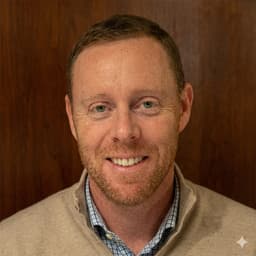
I live in Bend, Oregon. I got into AI the hard way, during a long recovery from a serious sports injury, when I had the time and the stubbornness to go deep on something that reshaped how I think about operational work. I've written more about that story on Substack.